
Custom Wine Rooms in New Orleans, LA
Turn Everyday Space Into Something Worth Sharing
Serving wine collectors throughout Greater New Orleans and the Northshore
Bring Your Collection Into the Space Around You
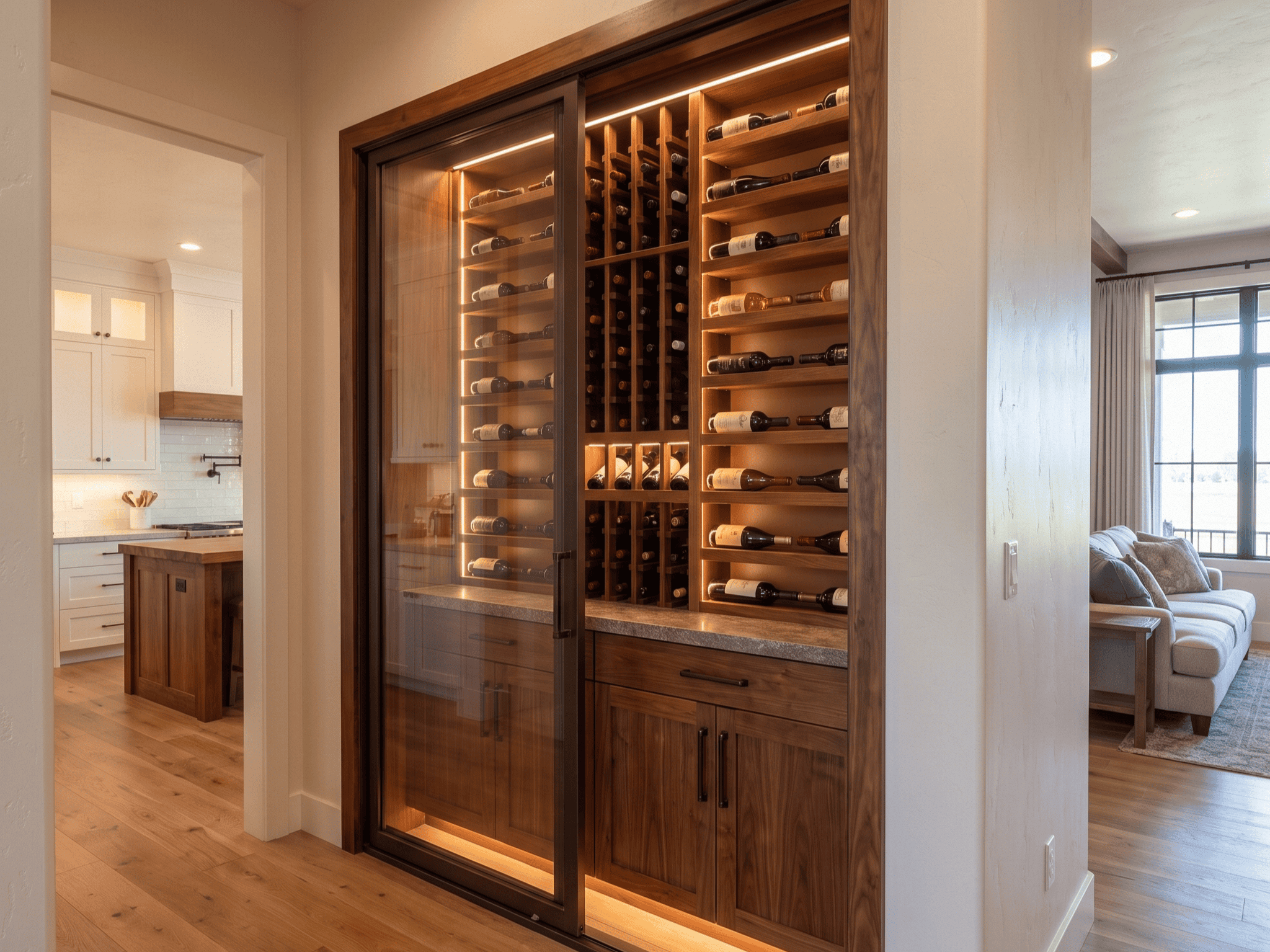
A custom wine room gives the collection a visible place within the home rather than separating it behind a traditional cellar door. Dining rooms, under-stair areas, unused walls, alcoves, and other overlooked spaces can become architectural features built around the way you collect and entertain.
These projects still require more than attractive racking. Bottle capacity, accessibility, lighting, materials, glass, surrounding finishes, and the effect of the room’s natural conditions all need to be understood before the design takes shape. Working with a wine-space specialist helps ensure the finished installation feels integrated into the home rather than added as decoration.
What Makes a Wine Room Feel Complete
Space Planning
Find New Possibilities in the Home You Already Have
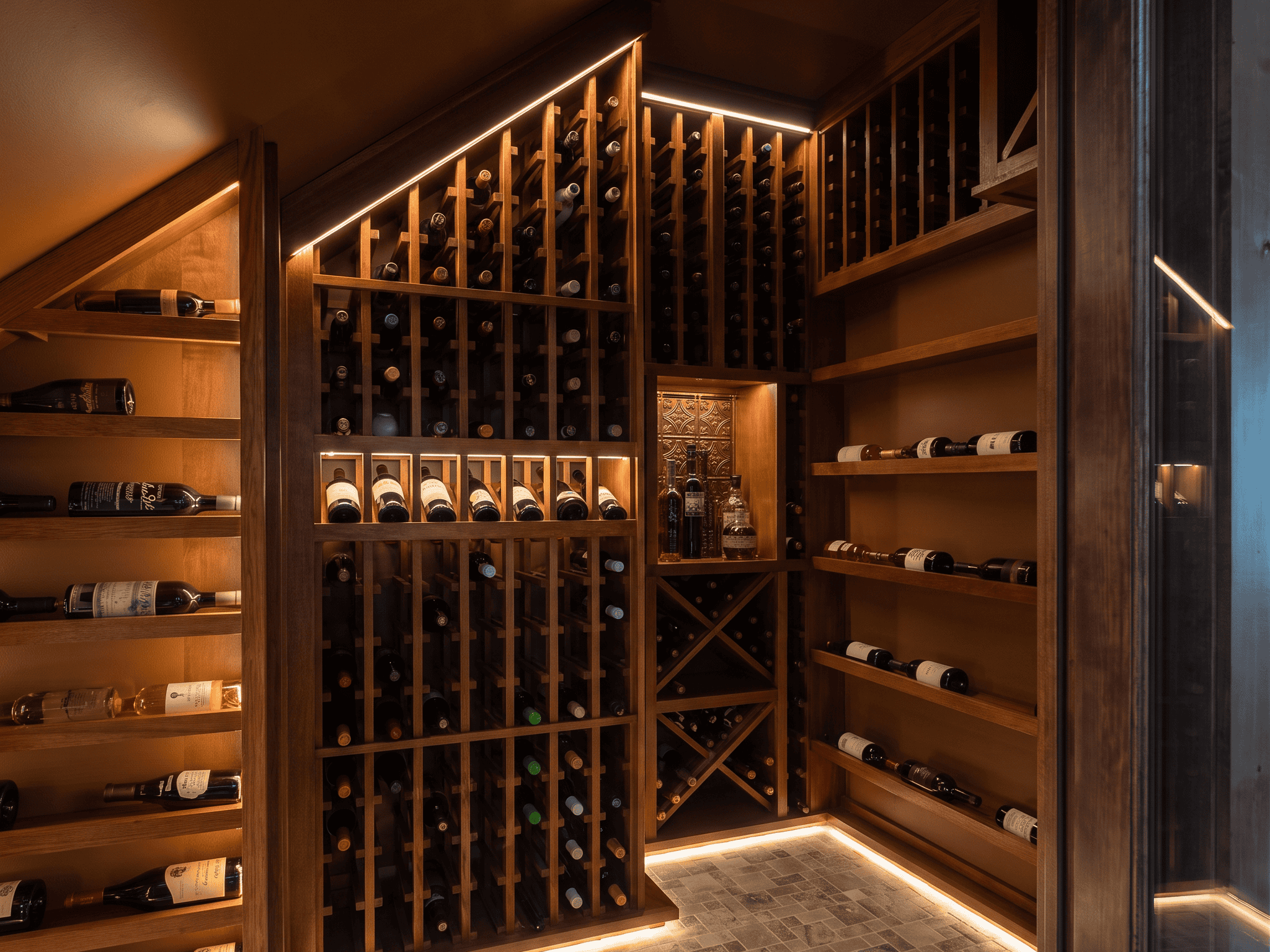
Wine rooms do not always require a large dedicated room. A dining room wall, unused alcove, former closet, or space beneath a staircase may offer enough room to create something distinctive and useful.
The right approach begins by understanding the limitations and opportunities of the location. Dimensions, traffic flow, sightlines, surrounding finishes, and access all influence what the space can realistically become.
- Flexible Locations: Designed for dining areas, feature walls, alcoves, under-stair spaces, and more.
- Efficient Use of Space: Storage is planned carefully without overwhelming the surrounding room.
- Architectural Awareness: The design accounts for nearby doors, walkways, furniture, and sightlines.
Collection Display
Make the Collection Part of the Experience
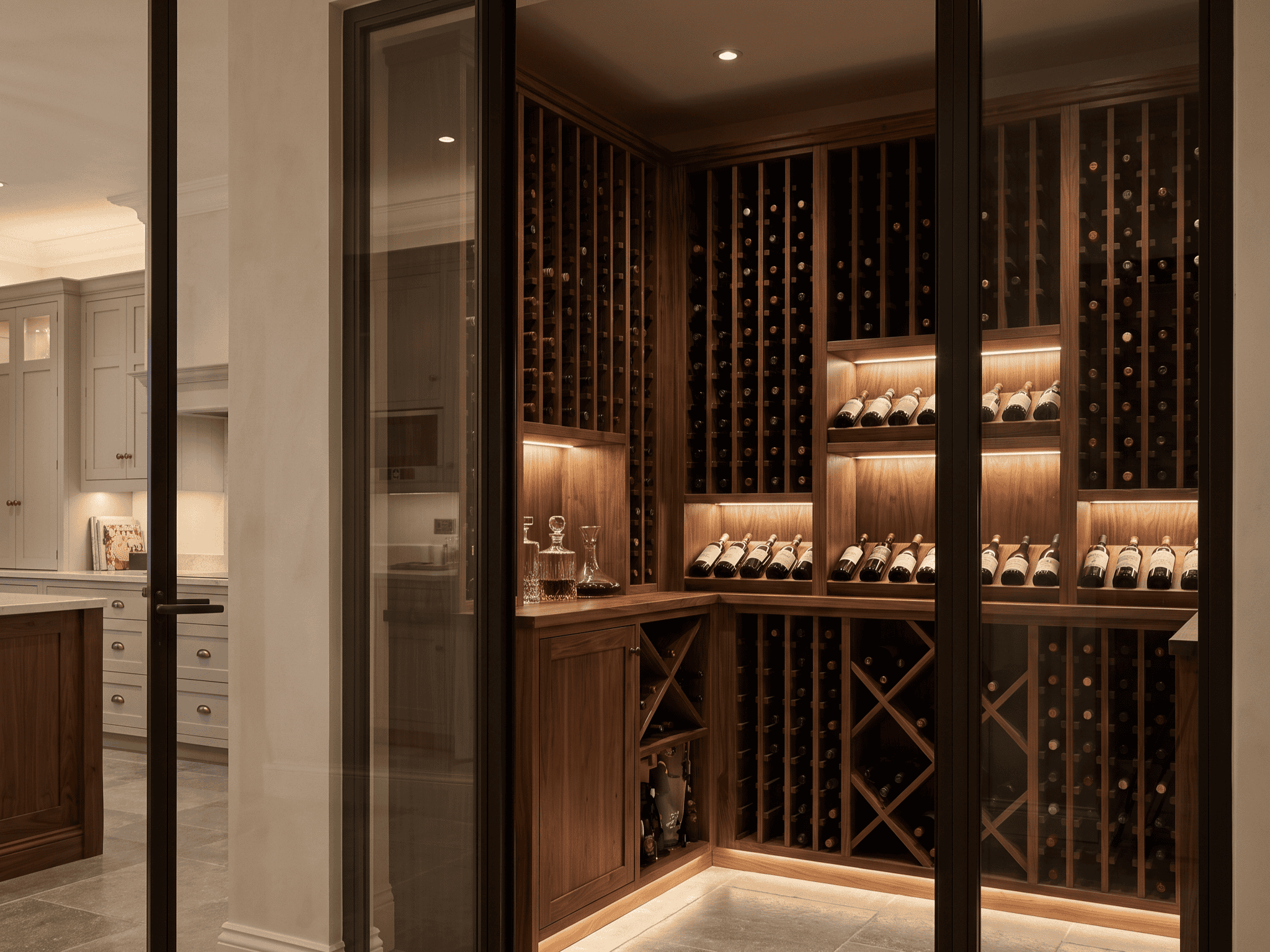
A wine room invites the collection into daily life. Bottle orientation, lighting, spacing, and presentation determine whether the result feels like intentional architecture or simply exposed storage.
The layout can highlight favorite bottles, create visual rhythm, and give guests a reason to pause. At the same time, the collection should remain accessible enough to enjoy rather than becoming a display that is difficult to use.
- Purposeful Presentation: Bottles can be label-forward, neck-out, stacked, or arranged around featured selections.
- Layered Lighting: Illumination adds atmosphere while drawing attention to the collection.
- Practical Access: Frequently enjoyed bottles remain easy to identify and retrieve.
Material Direction
Match the Character of the Surrounding Home
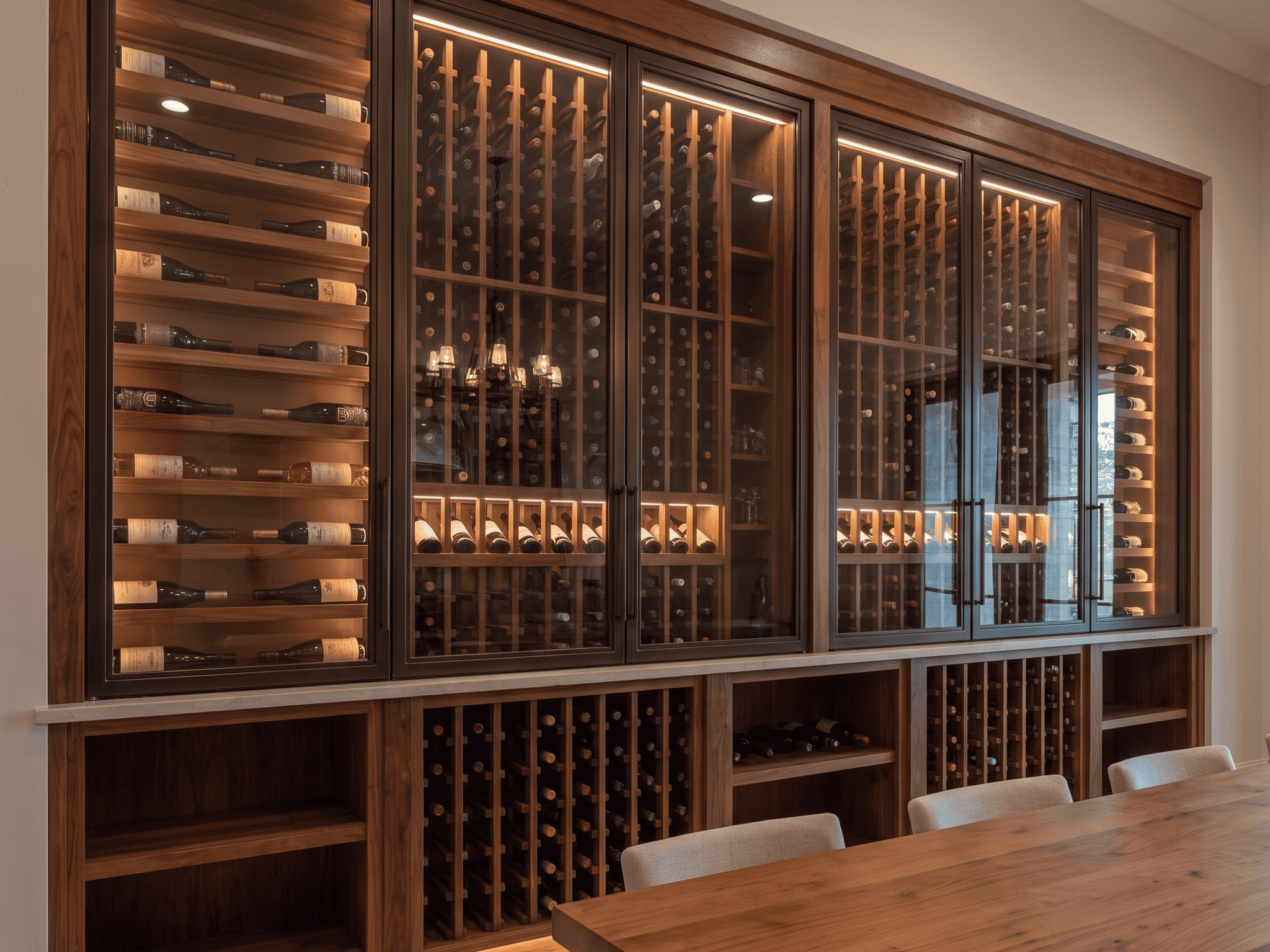
Wine rooms can take on a wide range of styles, from traditional woodwork to modern metal, acrylic, cable, and glass systems. The strongest material direction is not necessarily the trendiest one. It is the one that belongs in the room around it.
Colors, textures, hardware, cabinetry, flooring, and lighting are considered together so the installation feels cohesive. This allows the collection to stand out without making the wine room feel disconnected from the rest of the home.
- Broad Material Options: Wood, metal, acrylic, cable systems, and glass support different styles.
- Coordinated Finishes: Colors and textures are selected alongside the surrounding architecture.
- Custom Detailing: Trim, cabinetry, and transitions help the new feature feel built into the room.
Specialized Planning
Know When the Space Needs More Than a Display
Not every wine room serves the same purpose. Some are designed primarily for presentation and short-term storage, while others need more controlled conditions to protect bottles over longer periods.
In South Louisiana, heat, sunlight, airflow, and the location of the space deserve extra attention when deciding whether a display can remain passive or should include climate control.
- Use-Based Recommendations: Planning reflects whether the wine is displayed, enjoyed regularly, or aged long term.
- Environmental Consideration: Sunlight, heat, airflow, and surrounding conditions are evaluated early.
- Clear Design Direction: The level of enclosure and climate control is determined before the project moves forward.
A Process Built Around Your Collection
Every step is planned around your space, your collection, and how you want to enjoy it.

Discovery
The process begins with a conversation about your collection, your space, and what you want the finished project to become. Details are gathered to establish the right direction.

Design Development
The layout, storage plan, materials, lighting, and overall design direction begin to take shape. Renderings help bring the ideas together and allow the details to be refined before work begins.

Build & Installation
Once the design is approved, the project moves into construction and installation. Decisions, communication, and scheduling stay organized as the space begins to take shape.

Ready to Enjoy
Once the work is complete, the finished space is ready for your collection, your favorite bottles, and the moments you planned it around. From there, it becomes part of how you gather, host, and enjoy wine at home.
Read What our Customers Have to Say

“Great experience. Construction was smooth and clean. Crew did a wonderful job on never leaving a mess. Final product was outstanding”
-Trip S.
(via Google Review)
“It came out absolutely amazing and we couldn’t be happier! I would highly recommend John!”
-Rodney C.
(via Google Review)
“From design to build , step by step Quality craftsmanship”
-Francisco D.
(via Google Review)
Why Wine Collectors Choose ARCA
A custom wine space has to do more than make an impression. It must support the collection, complement the surrounding architecture, and account for technical details that may never be visible once the project is complete.
ARCA brings wine knowledge, fine woodworking, and specialized construction experience together under one focused approach.
A Focused Specialty
Wine cellars, wine rooms, and displays are not an add-on service. This is the work ARCA is built around.
Wine Knowledge
Storage conditions, bottle formats, and collection habits shape better design decisions.
Fine Craftsmanship
Detailed woodworking experience brings precision to every visible finish.
Built Beyond the Surface
Cooling, insulation, vapor control, and airflow support long-term performance.

Proudly Serving Greater New Orleans and the Northshore
Our Service Area
Custom Wine Cellars Throughout the Region
ARCA Wine Cellars designs and builds custom wine cellars, wine rooms, and commercial wine displays for clients throughout Greater New Orleans and the Northshore.
Based in the New Orleans area, ARCA serves homeowners, builders, designers, restaurants, and hospitality businesses in communities including:
- New Orleans
- Metairie
- Old Metairie
- Lakeview
- Uptown
- Garden District
- Mandeville
- Covington
- Madisonville
Don’t see your location listed? Give us a call at (985) 283-2424 to discuss your project and confirm service availability.
FAQ
What is the difference between a custom wine room and a traditional wine cellar?
The distinction usually comes down to how the space is used, where it sits within the home, and whether long-term climate-controlled wine storage is the primary goal. A traditional custom wine cellar is typically a dedicated, enclosed environment designed around consistent temperature and humidity. A custom wine room may be more integrated into the living space and place greater emphasis on presentation, entertaining, and making the collection visible.
That could mean transforming part of a dining room, building a wine wall along an unused interior wall, enclosing an under-stair area with glass, converting a wine closet, or creating a display between two living spaces. Some of these projects are climate controlled, while others are designed primarily as attractive, accessible wine storage for bottles that will be enjoyed sooner.
The right approach depends on the collection. Someone aging valuable bottles for many years has different requirements than someone who regularly rotates through their wine and wants the collection to become part of the home. ARCA helps determine how much environmental control, enclosure, storage capacity, and specialized construction the project actually needs before the design direction is finalized.
Does a custom wine room need a cooling system?
Not necessarily. Some custom wine rooms are designed as passive displays, while others need the same level of climate planning as a dedicated wine cellar. The deciding factors include how long the wine will be stored, the value and sensitivity of the collection, the room’s location, sunlight exposure, surrounding temperatures, glass, and how frequently bottles are opened and replaced.
For wine intended for long-term aging, stable storage conditions become much more important. Around 55°F is commonly used as a target temperature for long-term wine storage, with relative humidity often maintained somewhere around 50% to 70%. A properly designed wine cellar cooling unit can help maintain those conditions, but the cooling equipment is only one part of the system. Insulation, vapor control, glass, airflow, doors, and room preparation all affect performance.
This deserves particular attention in South Louisiana. A glass wine display in a dining room exposed to sunlight and warm surrounding air presents very different conditions than an interior wine closet with little temperature variation. Rather than assuming every project needs cooling, or that none of them do, the space should be evaluated around the wine being stored and the environment around it.
Where can a wine display or custom wine room be built in my home?
Many homeowners have more possibilities than they initially realize. Custom wine storage can be incorporated into dining rooms, under-stair spaces, unused walls, alcoves, closets, pantries, transitional areas, and other parts of the home that are not currently being used to their full potential.
The available square footage is only one consideration. Sightlines, traffic flow, furniture placement, sunlight, ceiling height, nearby doors, access to the bottles, and the surrounding architecture all influence what will work. A narrow wall may be ideal for a label-forward wine display, while an under-stair space might accommodate deeper storage and a combination of individual bottle slots and bulk storage.
The objective is not always to fit the maximum number of wine bottles into the smallest possible area. A successful design should make the collection easier to access and enjoy while still feeling proportionate to the room. In many cases, thoughtful custom wine racks, wine cabinets, glass, and lighting can turn a previously overlooked area into one of the most distinctive features in the home.
What types of racking and materials can be used in a custom wine room?
There is a much broader range of options than traditional rows of wood wine racks. Depending on the architecture and desired style, custom wine storage can incorporate wood, metal wine racks, acrylic supports, cable systems, glass, cabinetry, or combinations of several materials.
Bottle presentation can vary just as much. Some clients prefer label-forward displays that make individual bottles easy to recognize, while others want neck-out storage, stacked bottles, case storage, or a mixture of practical storage and featured selections. Bottles sealed with natural cork are commonly stored horizontally during long-term storage so the wine remains in contact with the cork, although the appropriate layout also depends on bottle type, closure, and how the collection will be used.
The surrounding room should guide the design. A contemporary home may call for a clean glass wine wall with metal or acrylic supports, while a more traditional interior may be better suited to custom wine cabinets, millwork, and wood racking. The goal is not to force every project into the same version of a modern wine cellar. Materials, finishes, lighting, and bottle orientation should make the installation feel like it belongs in that particular home.
How do glass, lighting, and room conditions affect a wine display?
Glass and lighting can make a wine display one of the most visually impressive features in a home, but they also affect the environment around the bottles. Large glass surfaces can increase heat transfer, direct sunlight can expose wine to unwanted heat and ultraviolet light, and poorly selected lighting can add unnecessary thermal load.
For displays that are climate controlled, the type and amount of glass need to be considered when sizing the cooling system and preparing the enclosure. Depending on the application, insulated glazing and properly sealed doors may be appropriate to reduce unwanted heat transfer and condensation risk. These details matter even more in South Louisiana, where outdoor heat and humidity can place additional demands on an enclosed wine space.
Lighting should also be planned around both presentation and preservation. Low-heat LED lighting is commonly preferred because it can highlight wine racks, cabinetry, and individual bottles without introducing the same amount of heat as older lighting technologies. Placement matters as well. The goal is to create enough illumination to make the collection feel intentional without exposing the wine to unnecessary heat or light.
This is why a successful wine display is more than attractive shelving. Glass, lighting, storage, room conditions, and climate control all need to support the way the collection will actually be kept and enjoyed.
Let’s Discuss Your Project