
Custom Wine Cellars in New Orleans, LA
Designed to Protect What You Collect and Enjoy
Serving wine collectors throughout Greater New Orleans and the Northshore
Built for Proper Storage and Lasting Enjoyment
A custom wine cellar is one of those projects where the finished appearance can hide a lot of important decisions. Cooling, insulation, vapor control, airflow, bottle capacity, lighting, and material selection all affect how the space performs long after construction is complete.
ARCA Wine Cellars specializes in bringing those details together. Instead of treating the cellar like another room in the house, the project is planned around the collection, the storage environment, and the experience the client wants to create. That focused approach helps reduce costly mistakes, protect the wine, and produce a finished space that feels considered from the inside out.
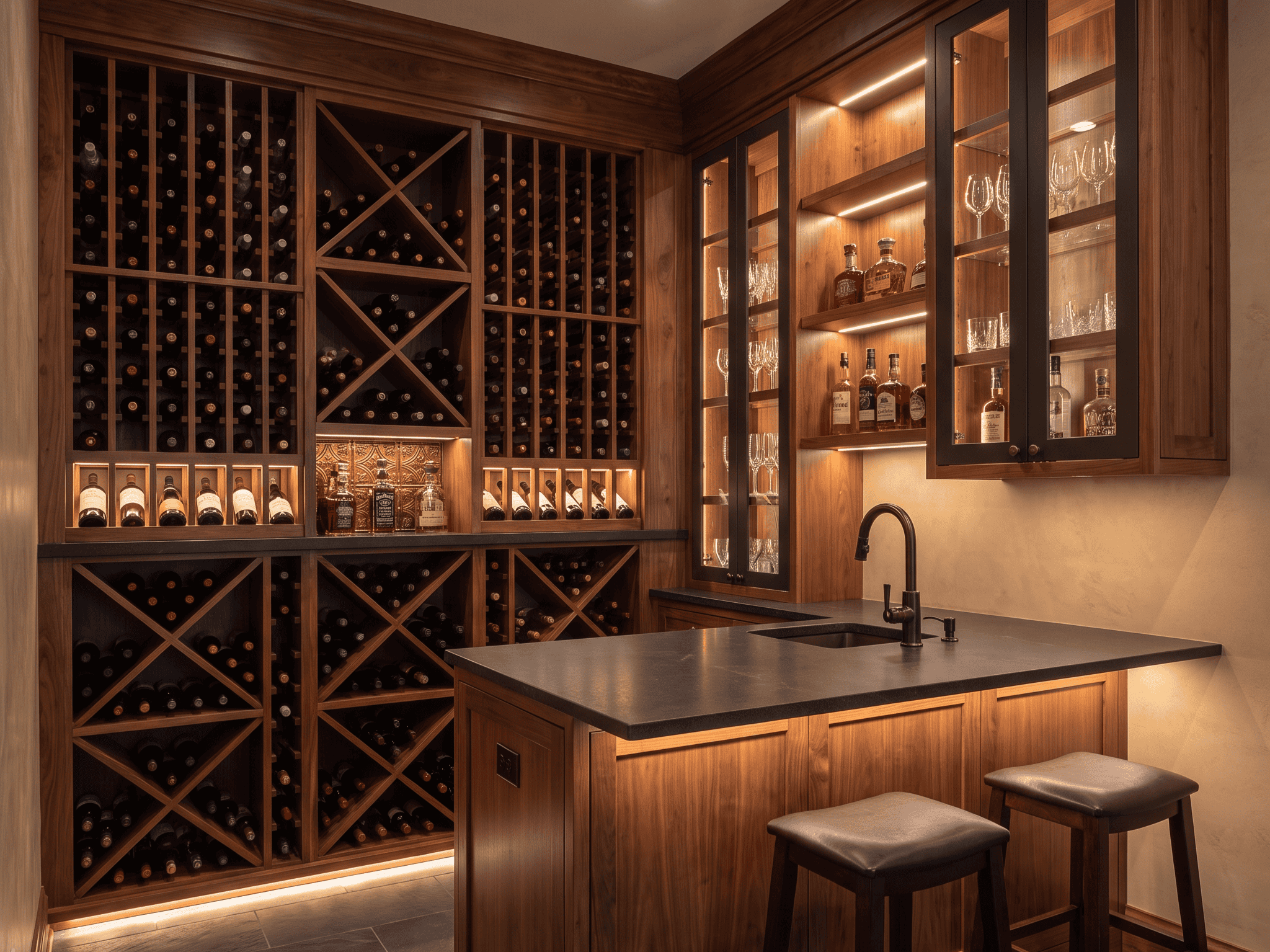
What Goes Into a Properly Built Wine Cellar
Collection Planning
Designed Around the Wine You Actually Own
A strong cellar layout starts with more than a bottle count. Standard bottles, large formats, cases, display bottles, everyday selections, and long-term holdings all create different storage needs.
The goal is not simply to maximize capacity. It is to create a collection that feels organized, accessible, and ready to grow without forcing the room into a cramped or overly repetitive layout.
- Bottle-Specific Storage: Space for standard bottles, large formats, cases, and featured selections.
- Balanced Capacity: Efficient storage without making the room feel crowded.
- Room to Grow: Planning that accounts for future purchases and a changing collection.
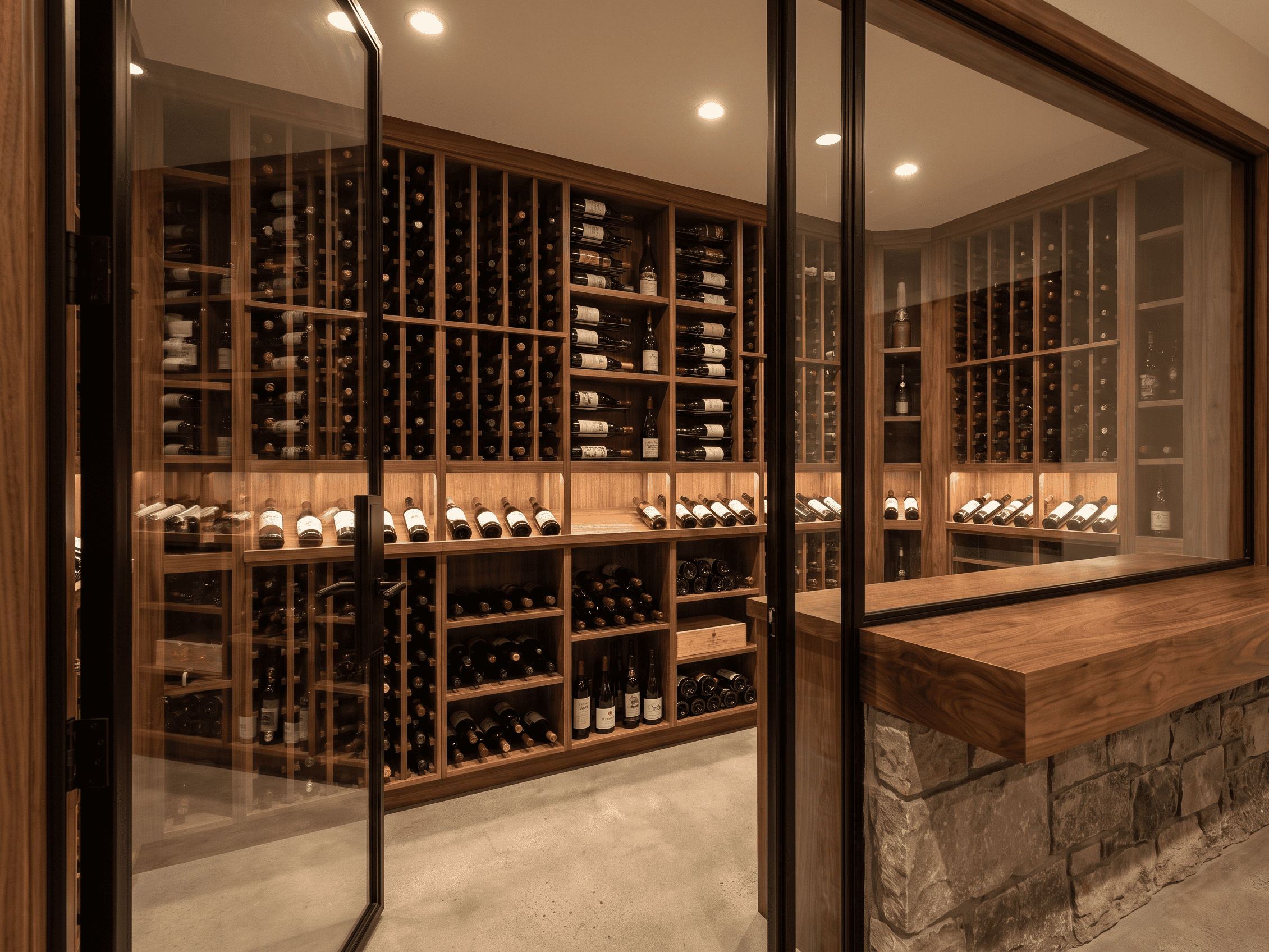
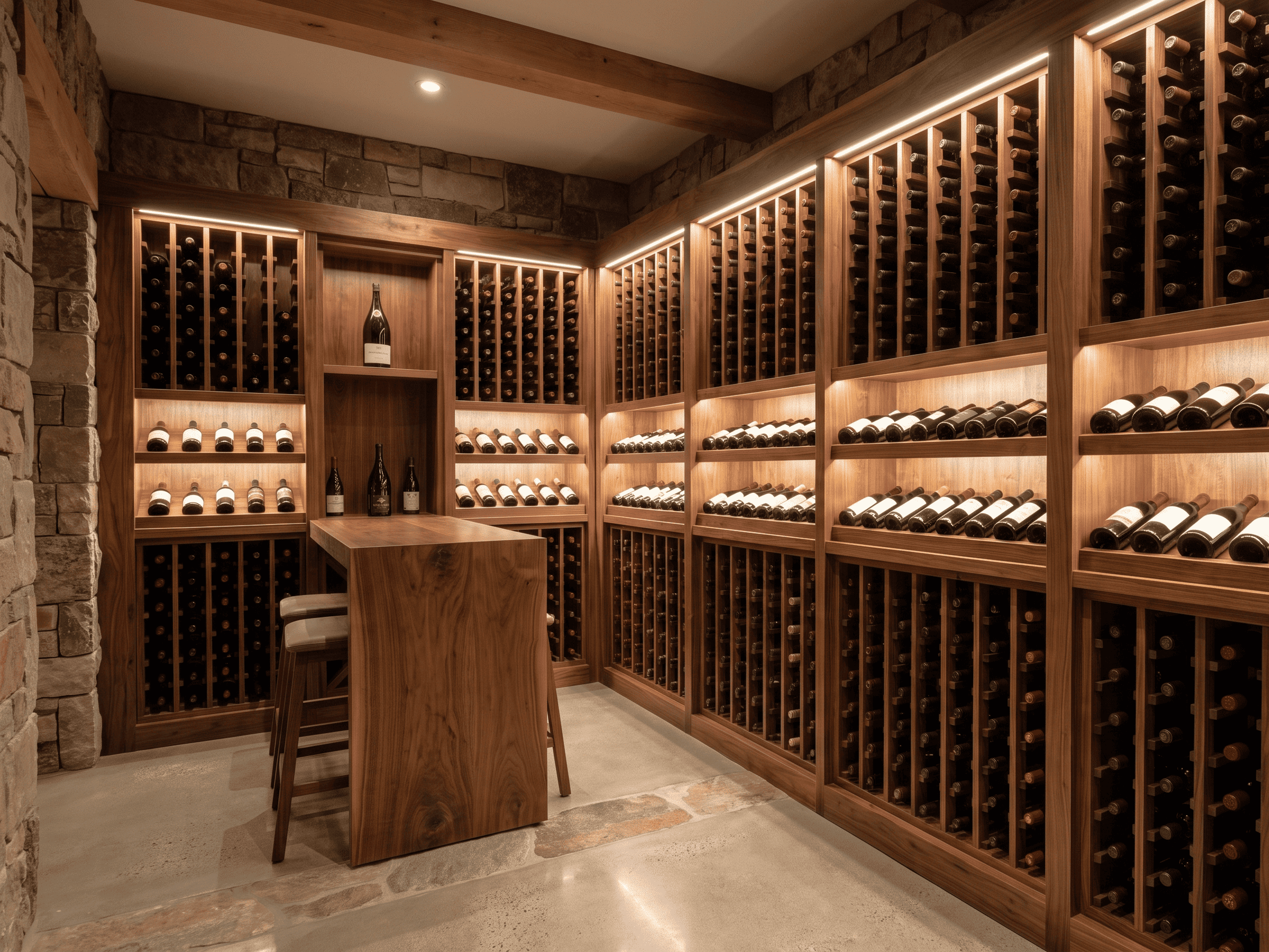
Climate Performance
Protect the Collection Behind the Finished Walls
A cooling unit is only one part of a properly built cellar. Insulation, vapor control, airflow, room location, glazing, and system sizing all affect whether the space can maintain stable storage conditions.
In South Louisiana, prolonged heat, high humidity, glass exposure, and the location of the room all influence how the cellar must be prepared and cooled. Addressing those conditions early helps protect the collection and reduces the risk of performance problems after the finishes are complete.
- Proper System Sizing: Cooling selected around the room’s size, location, and expected load.
- Complete Room Preparation: Insulation, vapor control, and airflow planned before finishes are installed.
- Discreet Integration: Equipment incorporated without becoming the visual focus of the room.
Design and Craftsmanship
Make the Cellar Feel Built Into the Home
A custom cellar should feel connected to the architecture around it. Racking, cabinetry, flooring, glass, lighting, doors, and surrounding finishes all influence whether the room feels intentional or added after the fact.
Years of fine woodworking and technical finish work bring added precision to the visible parts of each project. The result is a space that supports the wine while still feeling worthy of the home it belongs in.
- Cohesive Materials: Wood, metal, glass, stone, and finishes selected as one complete interior.
- Purposeful Lighting: Designed for visibility, atmosphere, and bottle presentation.
- Architectural Fit: Details shaped to complement the character of the surrounding home.
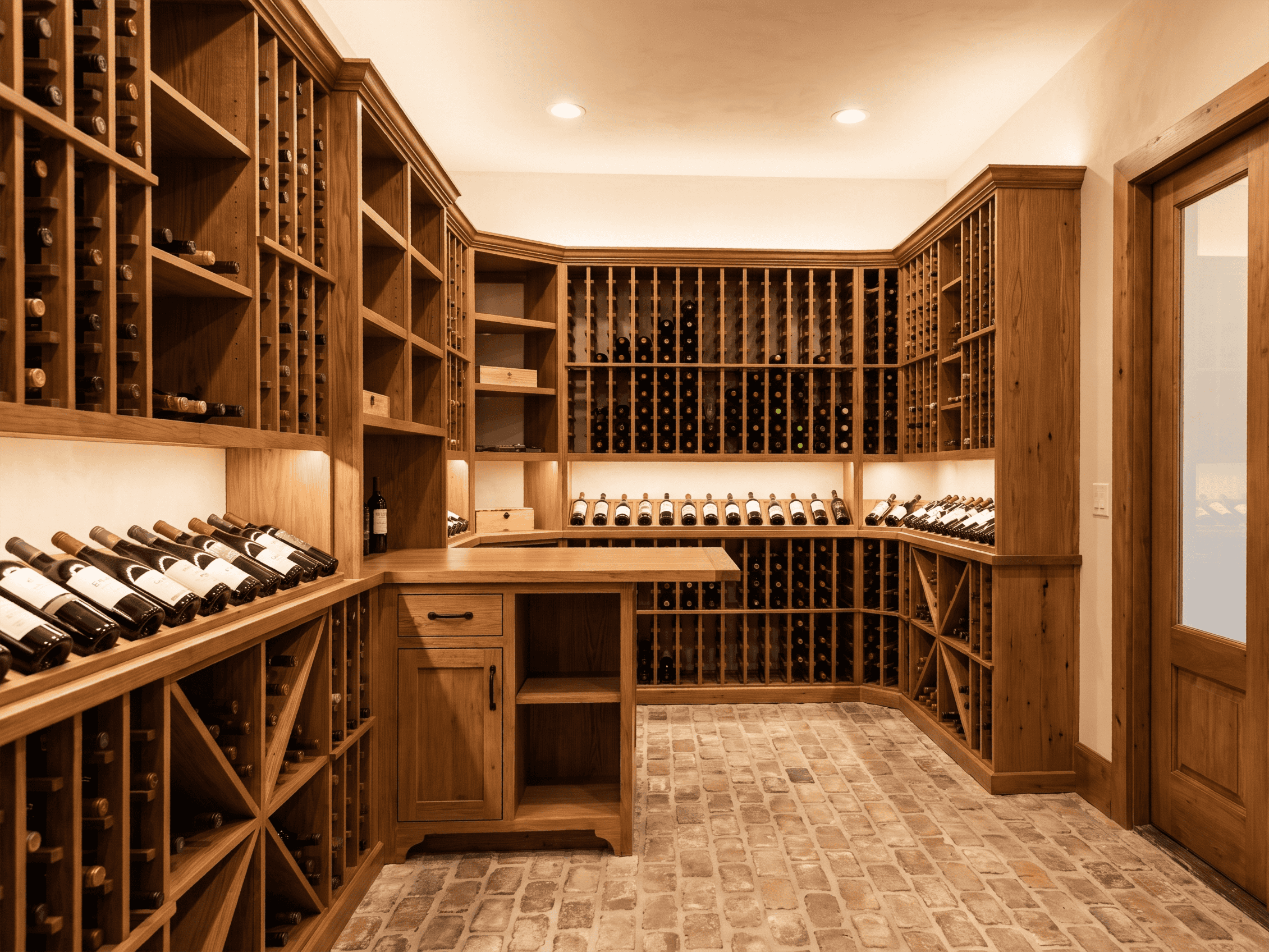
Specialized Oversight
Avoid Treating the Cellar Like Just Another Room
Wine cellars involve decisions that do not appear in most residential projects. Cooling requirements, wall preparation, bottle orientation, access, maintenance, and long-term performance all need to be considered together.
Working with a specialist means those decisions are made with the finished cellar in mind from the beginning. That focused oversight helps prevent gaps between the design, the technical requirements, and the way the room will ultimately be used.
- Specialty-First Planning: Decisions are made around the needs of the cellar, not a generic room build.
- Fewer Costly Oversights: Technical requirements are addressed before they become expensive corrections.
- One Complete Vision: Storage, performance, and appearance remain aligned throughout the project.
A Process Built Around Your Collection
Every step is planned around your space, your collection, and how you want to enjoy it.

Discovery
The process begins with a conversation about your collection, your space, and what you want the finished project to become. Details are gathered to establish the right direction.

Design Development
The layout, storage plan, materials, lighting, and overall design direction begin to take shape. Renderings help bring the ideas together and allow the details to be refined before work begins.

Build & Installation
Once the design is approved, the project moves into construction and installation. Decisions, communication, and scheduling stay organized as the space begins to take shape.

Ready to Enjoy
Once the work is complete, the finished space is ready for your collection, your favorite bottles, and the moments you planned it around. From there, it becomes part of how you gather, host, and enjoy wine at home.
Read What our Customers Have to Say

“Great experience. Construction was smooth and clean. Crew did a wonderful job on never leaving a mess. Final product was outstanding”
-Trip S.
(via Google Review)
“It came out absolutely amazing and we couldn’t be happier! I would highly recommend John!”
-Rodney C.
(via Google Review)
“From design to build , step by step Quality craftsmanship”
-Francisco D.
(via Google Review)
Why Wine Collectors Choose ARCA
A custom wine space has to do more than make an impression. It must support the collection, complement the surrounding architecture, and account for technical details that may never be visible once the project is complete.
ARCA brings wine knowledge, fine woodworking, and specialized construction experience together under one focused approach.
A Focused Specialty
Wine cellars, wine rooms, and displays are not an add-on service. This is the work ARCA is built around.
Wine Knowledge
Storage conditions, bottle formats, and collection habits shape better design decisions.
Fine Craftsmanship
Detailed woodworking experience brings precision to every visible finish.
Built Beyond the Surface
Cooling, insulation, vapor control, and airflow support long-term performance.

Proudly Serving Greater New Orleans and the Northshore
Our Service Area
Custom Wine Cellars Throughout the Region
ARCA Wine Cellars designs and builds custom wine cellars, wine rooms, and commercial wine displays for clients throughout Greater New Orleans and the Northshore.
Based in the New Orleans area, ARCA serves homeowners, builders, designers, restaurants, and hospitality businesses in communities including:
- New Orleans
- Metairie
- Old Metairie
- Lakeview
- Uptown
- Garden District
- Mandeville
- Covington
- Madisonville
Don’t see your location listed? Give us a call at (985) 283-2424 to discuss your project and confirm service availability.
FAQ
What should I consider before building a custom wine cellar?
A successful custom wine cellar starts with the wine collection itself. How many bottles you own, the types and sizes of bottles you collect, how often you access them, what you want to display, and how much room you want for future growth can all affect the design. From there, the location of the room, surrounding temperatures, glass, insulation, lighting, cooling requirements, and available space need to be considered together.
This is why building custom wine cellars requires more planning than simply choosing attractive wine racks. The room has to function as a complete wine storage environment while still feeling like it belongs in the home. A custom wine cellar project may include wood wine racks, metal wine racks, cabinetry, glass, custom wine cellar doors, lighting, flooring, cooling equipment, and architectural finish work, depending on the collection and design.
ARCA approaches these decisions as one connected project rather than treating the racking, cooling, and finishes as separate pieces. That helps ensure the finished wine cellar supports both the collection and the way the homeowner wants to experience it.
What temperature and humidity should a wine cellar maintain?
For long-term wine storage, around 55°F is widely used as a target cellar temperature, with relative humidity commonly maintained in roughly the 60–70% range. Just as important as reaching a particular number is maintaining reasonably consistent conditions over time. Excessive heat and large temperature swings can accelerate the aging process and place unnecessary stress on a wine collection.
Humidity also matters. Conditions that are too dry can be hard on natural corks over long periods, while excessive humidity can contribute to mold, mildew, and damaged labels. In South Louisiana, where heat and humidity are persistent for much of the year, the room itself has to be prepared properly rather than relying on a cooling unit alone.
Insulation, vapor control, airflow, glazing, wine cellar doors, and equipment sizing all influence how effectively a climate-controlled wine cellar performs. The right solution depends on the room, which is why the storage environment should be planned before construction and finish work are finalized.
Where can a custom wine cellar be built in my home?
Custom wine cellars can be created in more places than many homeowners expect. Dedicated rooms are an obvious option, but closets, pantries, under-stair areas, spare rooms, home offices, and other existing spaces may also be candidates for conversion. New construction can provide even more flexibility because the wine cellar can be planned alongside the rest of the home.
The best location is not necessarily the largest available room. Sunlight, surrounding heat, access, ceiling height, exterior walls, glass, mechanical requirements, and the desired bottle capacity can all affect whether a space is a good fit for long-term wine storage.
A smaller room with thoughtful custom wine racks may ultimately function better than a larger room with an inefficient layout. During planning, the goal is to understand what the space can realistically support and then design the wine cellar around the collection rather than forcing a predetermined layout into the room.
Why should I work with a wine cellar builder instead of having my general contractor handle it?
A general contractor can be excellent at building homes and completing renovations, but a climate-controlled wine cellar introduces requirements that are uncommon in most residential rooms. Cooling load, insulation, vapor control, airflow, glazing, door seals, lighting, bottle storage, and equipment placement can all affect long-term performance.
Experienced wine cellar builders look at those elements together from the beginning. For example, beautiful custom wine racks do little to protect the collection if the room envelope or cooling system is improperly designed. Likewise, a powerful cooling unit cannot necessarily overcome problems created by excessive glass, poor insulation, air leakage, or an incorrectly prepared room.
ARCA specializes in wine cellars, wine rooms, and displays rather than offering them as one small part of a broad remodeling menu. That specialty allows the design, construction requirements, wine storage needs, and finished appearance to remain connected throughout the project.
What design options are available for a custom wine cellar?
There is no single look a custom wine cellar has to follow. Traditional spaces may feature custom wood wine racks, cabinetry, millwork, stone, and warmer finishes, while a modern wine cellar may incorporate metal wine racks, cable systems, acrylic, large areas of glass, and more minimal detailing. Many projects combine materials to create something that fits naturally with the architecture of the home.
Wine racks can also be designed around the collection rather than using one repeated bottle configuration throughout the room. Standard bottles, large-format bottles, cases, featured bottles, and display rows can each be given appropriate storage. Wine cellar doors, lighting, flooring, glass, cabinetry, and other finishes can then be coordinated with the racking so the room feels like one complete interior.
Lighting deserves particular attention. Low-heat LED lighting is commonly used in wine cellars because it can illuminate the collection and architectural details without adding the same heat load as older lighting technologies. The final design should balance presentation with preservation so the wine collection looks exceptional without compromising the conditions it needs.
Let’s Discuss Your Project